

In a rapidly changing world where the boundaries between disciplines blur, the significance of geography has evolved beyond traditional mapmaking. The pursuit of a Master of Arts (M.A.) in Geography is increasingly recognized as a catalyst for career transformation. This blog post delves into the profound impact of M.A. in Geography programs, exploring the multifaceted roles graduates play in shaping various industries.
The Evolving Landscape of Geographic Professions
Geography, once confined to classrooms and atlases, has emerged as a dynamic field with applications in technology, urban planning, environmental management, and beyond. The interdisciplinary nature of geographic professions demands versatile skillsets, making M.A. in Geography programs a crucial avenue for aspiring professionals.
M.A. in Geography: A Catalyst for Career Transformation
The journey of an M.A. in Geography extends far beyond acquiring theoretical knowledge. It acts as a transformative experience, equipping individuals with practical skills and a deep understanding of spatial relationships. This foundational knowledge becomes the bedrock for diverse career paths.
Specializations Within M.A. in Geography Programs
One of the unique aspects of the M.A. in Geography program is the opportunity to specialize. Whether it’s Geographic Information Systems (GIS), urban planning, or environmental geography, these specializations allow graduates to tailor their education and expertise to match their career aspirations.
Academic Pathways Post M.A. in Geography
The impact of an M.A. in Geography extends to academia, where graduates contribute to the field’s knowledge base. Pursuing a Ph.D. in Geography becomes a natural progression, enabling individuals to delve deeper into research and advance the frontiers of geographical understanding.
Professional Cartography and GIS Careers
Geographical Information Systems (GIS) specialists, armed with their M.A. in Geography, play a pivotal role in professional cartography and GIS. Their spatial analysis skills contribute to decision-making processes in diverse industries, from environmental management to business intelligence.
Shaping Urban and Regional Planning
M.A. in Geography professionals influence the fabric of cities and regions. Their unique perspective, considering social, environmental, and spatial aspects, makes them valuable contributors to urban and regional planning. They actively shape the way communities evolve and interact with their surroundings.
Contributions to Environmental Management and Conservation
Addressing global challenges such as climate change and biodiversity conservation requires expertise in understanding the environment. M.A. in Geography graduates contribute significantly to environmental management and conservation efforts, offering insights that can shape policies and practices.
International Development and Global Affairs
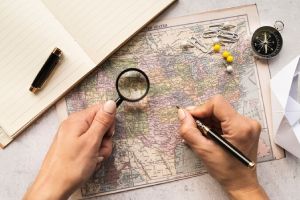 The impact of geography goes beyond borders. M.A. in Geography professionals contribute to international development and global affairs by bringing their spatial perspectives to the table.
Their understanding of cultural nuances and geographical factors plays a crucial role in addressing global challenges.
Integrating Geographic Information Science (GISc) in Tech Careers
As technology continues to advance, the integration of Geographic Information Science (GISc) becomes increasingly relevant. M.A. in Geography graduates find themselves at the forefront of tech careers, using spatial data to develop mapping applications and contribute to technological advancements.
Corporate Applications of Geography
Geography isn’t confined to academia; it has a significant role in corporate settings. M.A. in Geography professionals find themselves in roles like market research, location analysis, and business intelligence, where understanding geographical trends is crucial for success.
Teaching and Education: Inspiring Future Geographers
For some M.A. in Geography graduates, the impact goes beyond professional settings. They step into classrooms, shaping the next generation’s understanding of the world. Their passion for geography becomes a catalyst for inspiring future geographers.
Contributions to Non-Profit and Humanitarian Organizations
Geography becomes a tool for change in the hands of M.A. Geography professionals working with non-profit and humanitarian organizations. Their expertise is applied to projects that address societal challenges, making a positive impact on communities around the globe.
Geographic Journalism and Media: Communicating Complex Insights
The ability to communicate complex geographical insights is a unique skill possessed by M.A. in Geography graduates. In roles related to geographic journalism and media, they become storytellers, making intricate issues accessible and engaging for the public.
Navigating Emerging Trends and Technologies in Geography Careers
Staying relevant in the field of geography requires staying abreast of emerging trends and technologies. M.A. in Geography professionals navigate these changes, ensuring they remain at the forefront of geographical advancements.
Showcasing Alumni Success Stories
Real-world impact is best illustrated through the stories of alumni. This section showcases inspirational journeys, detailing how an M.A. in Geography has shaped diverse career trajectories and positively influenced communities.
Challenges and Opportunities in Geographic Professions
No career path is without its challenges. M.A. in Geography professionals face market saturation and evolving industry demands. However, these challenges present opportunities for resilience, adaptability, and continuous professional development.
The Role of Networking and Professional Development
Networking becomes a crucial element for advancing in geography careers. This section explores how building connections within academia and industries facilitates growth opportunities. Additionally, the importance of continuous professional development is emphasized.
Conclusion: The Everlasting Impact of M.A. in Geography on Careers
In conclusion, the impact of pursuing an M.A. in Geography resonates across diverse career paths. This transformative journey not only equips individuals with knowledge and skills but instills a passion for understanding the world through a geographical lens. Prospective students are encouraged to explore the transformative possibilities within the field, where every landscape becomes an opportunity for exploration and impact.
Frequently Asked Questions for The Impact of M.A. in Geography on Careers
Q: How does pursuing an M.A. in Geography differ from undergraduate geography studies?
A: While undergraduate studies provide foundational knowledge, an M.A. in Geography delves deeper, emphasizing research, and practical skills, and often allowing specialization.
Q: What are the benefits of specializing in an M.A. in Geography program?
A: Specializations allow you to tailor your education, becoming an expert in areas like GIS, urban planning, or environmental geography, enhancing your career prospects.
Q: How does an M.A. in Geography contribute to urban planning?
A: M.A. in Geography professionals consider social, environmental, and spatial aspects, shaping urban development and influencing how communities evolve.
Q: Can an M.A. in Geography lead to a career in technology?
A: Absolutely. Graduates, especially those well-versed in GIS, find themselves at the forefront of tech careers, contributing to mapping applications and technological advancements.
Q: What is the role of M.A. in Geography professionals in environmental conservation?
A: They play a crucial role in environmental management, contributing insights to address global challenges such as climate change and biodiversity conservation.
Q: How does geography contribute to international development?
A: M.A. in Geography professionals bring spatial perspectives to international development, understanding cultural nuances and geographical factors influencing global affairs.
Q: Can someone with an M.A. in Geography work in business settings?
A: Yes, M.A. in Geography professionals find roles in market research, location analysis, and business intelligence, where understanding geographical trends is essential.
Q: How do M.A. in Geography graduates contribute to education?
A: They inspire future geographers by becoming educators, shaping the next generation’s understanding of the world through passion and expertise.
Q: What role does geography play in non-profit and humanitarian organizations?
A: M.A. in Geography professionals contribute their expertise to projects addressing societal challenges, making a positive impact in non-profit and humanitarian sectors.
Q: Can M.A. in Geography graduates work in journalism and media?
A: Yes, their storytelling skills and ability to communicate complex insights make them valuable in roles related to geographic journalism and media.
Q: How do geography professionals stay updated with emerging trends and technologies?
A: Continuous learning and staying informed about emerging trends, such as artificial intelligence and remote sensing, are crucial for geography professionals.
Q: What challenges do M.A. in Geography professionals face in their careers?
A: Challenges may include market saturation and evolving industry demands, emphasizing the need for resilience, adaptability, and continuous professional development.
Q: How important is networking for M.A. in Geography professionals?
A: Networking is crucial for career advancement, helping professionals build connections within academia and industries, and facilitating growth opportunities.
Q: What is the role of continuous professional development for M.A. in Geography graduates?
A: Staying relevant in a rapidly evolving field requires ongoing learning and professional development, ensuring graduates remain at the forefront of geographical advancements.
Q: How can M.A. in Geography graduates make an impact on environmental conservation?
A: By applying their expertise in environmental management, GIS, and spatial analysis, graduates contribute to conservation efforts and sustainable solutions.
Q: Can someone with an M.A. in Geography work internationally?
A: Absolutely. The international perspective gained during the program equips graduates to work globally, contributing to international development and global affairs.
Q: What distinguishes an M.A. in Geography from other master’s programs?
A: The interdisciplinary nature, emphasis on spatial relationships, and the ability to specialize make an M.A. in Geography unique among master’s programs.
Q: Can M.A. in Geography professionals transition to different industries during their careers?
A: Yes, the versatility of skills acquired allows for seamless transitions, enabling professionals to explore diverse industries throughout their careers.
Q: How do M.A. in Geography graduates contribute to technology advancements?
A: Especially in GIS, graduates contribute to technological advancements by developing mapping applications, leveraging spatial data, and exploring emerging technologies.
Q: Can you share examples of alumni success stories in geography?
A: Alumni success stories illustrate diverse career trajectories, showcasing how an M.A. in Geography has positively influenced communities and shaped successful careers.