

Art, at its essence, is transformative. It has the power to shape perspectives, evoke emotions, and redefine realities. In the realm of higher education, the pursuit of an M.A. in Arts becomes a profound journey—a canvas where creativity meets academia, and individuals undergo a metamorphosis. This blog delves into the heart of this transformative power, exploring the multifaceted landscape of Master of Arts in Arts programs.
I. Unveiling the Canvas: Understanding M.A. in Arts Programs
In the dim light of a studio, the first strokes on a blank canvas mark the beginning of a journey. M.A. in Arts programs, akin to this artistic inception, unravel the core components that form the foundation of transformative arts education. Here, theory and practice intertwine, creating an environment where creativity is not only nurtured but also refined through critical discourse.
II. Navigating the Palette: Overview of Arts Specializations
Imagine an artist standing before a vast palette, each color representing a specialization waiting to be explored. From the vivid hues of painting and drawing to the intricate patterns of printmaking and graphic arts, the digital pixels of new media, and the three-dimensional forms of sculpture—these specializations become pathways for individual artistic expression.
III. Mastering the Craft: In-Depth Exploration of Painting and Drawing Specializations
The artist’s hand moves with intention across the canvas, creating strokes that tell a story. In the world of M.A. in Arts, painting and drawing specializations are profound narratives. Traditional techniques merge seamlessly with contemporary expressions, giving birth to a new language of art that transcends boundaries.
IV. Shaping Narratives: Printmaking and Graphic Arts Specializations
Printmaking and graphic arts unfold as chapters in the artist’s journey. Traditional craftsmanship in printmaking becomes a dialogue with history, while graphic design’s role in M.A. programs transforms visual storytelling into a powerful medium for expression. Here, the artist becomes a storyteller, weaving narratives with images.
V. The Digital Revolution: Digital Art and New Media Specializations
A digital canvas materializes, and the artist enters a realm where pixels and passion converge. The emergence of digital art in M.A. programs marks a technological revolution, exploring virtual realities, animation, and motion graphics. Yet, amidst innovation, ethical considerations become guiding stars, ensuring responsible artistic creation.
VI. Sculpting Realities: M.A. in Sculpture and Installation Art
In the sculptor’s studio, clay transforms into dreams, and installations become immersive experiences. Traditional and contemporary approaches converge, with site-specific sculptures molding spaces and environmental installations creating dialogues with the world. This specialization becomes a medium to sculpt not just objects but the very essence of reality.
VII. The Studio Symphony: Practical Aspects of M.A. in Arts Programs
The studio becomes a symphony of creation, where artists immerse themselves in practical aspects. Collaborative projects take center stage, with the canvas expanding to include communal experiences. Exhibitions and public showcases become the crescendo, echoing the collective voice of artists finding resonance in their creations.
VIII. Mastering the Artistic Language: Theoretical Frameworks in Arts Education
Amidst the canvases and sculptures, the artist delves into the theoretical foundations of art. Art history, contemporary movements, and theoretical courses form the backdrop, adding layers of depth to every stroke and sculpture. Here, the artist becomes a scholar, understanding the context in which their work unfolds.
IX. Beyond the Canvas: Internships and Real-world Exposure in Arts Specializations
The artist steps out of the studio, embracing the real world through internships. These experiences bridge the gap between academia and professional practice, offering insights into the dynamics of galleries, art institutions, and the industry. The canvas of education extends beyond, painting a picture of practical application.
X. The Global Palette: M.A. in Arts Programs on an International Scale
The artist’s palette broadens to include global hues. M.A. in Arts programs become catalysts for international collaborations, welcoming diverse perspectives that enrich the artistic journey. The impact of varied cultures becomes evident in the brushstrokes and sculptures crafted within the global context.
XI. The Fusion of Art and Technology: Digital Dimensions in M.A. Programs
Art and technology entwine, creating a fusion that defines the contemporary artist. The digital canvas becomes a playground for innovation, and ethical considerations guide artists as they navigate the realms of technology. Here, the artist is not just a creator but a pioneer in the evolving landscape of digital dimensions.
XII. Crafting a Masterpiece: Applying for M.A. in Arts Programs
Crafting an application becomes an art form. The artist learns to present a standout portfolio—a visual autobiography that speaks volumes. Navigating the application process becomes a brushstroke at a time, with tips for successful admission interviews and insights into funding opportunities.
XIII. Alumni Tales: Journeys After M.A. in Arts
The canvas of education expands into the world as successful alumni share their post-graduation paths. Their stories become brushstrokes, painting a picture of the diverse trajectories carved by M.A. in Arts graduates. The influence of education on career trajectories is evident, and lessons learned echo through the narratives.
XIV. Challenges and Rewards: The Dynamic Landscape of M.A. in Arts
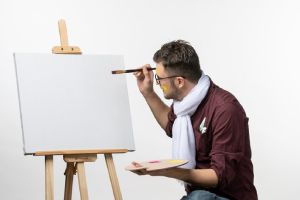 Amidst the triumphs, challenges emerge—creative blocks, the delicate balance of vision and expectations, and navigating the competitive art landscape. The artist’s journey is not without hurdles, yet within these challenges, there lies a canvas of personal and artistic growth, rewarding those who dare to embrace the transformative power of M.A. in Arts.
XV. Conclusion
As we approach the conclusion, we stand at the edge of a completed canvas—a journey through the transformative power of M.A. in Arts programs. The exploration becomes an ode to the artistic alchemy within each student, an acknowledgment of the profound impact art can have on the individual and society. The call to action resonates—an invitation to embrace the transformative power of art and education.